Knowledge bank
Mobile or semi-mobile filter press – what’s the difference?
Filter presses are often used in fixed industrial installations, but many projects require a more flexible solution. In such cases, a filter press can be supplied as semi-mobile or fully mobile facility. Both options are used when dewatering is required on a temporary basis, as part of a project or at several different sites. This may, for example, involve remediation projects, temporary processes, trial runs or campaign production. The difference lies mainly in how the facility is constructed and how easily it can be moved.
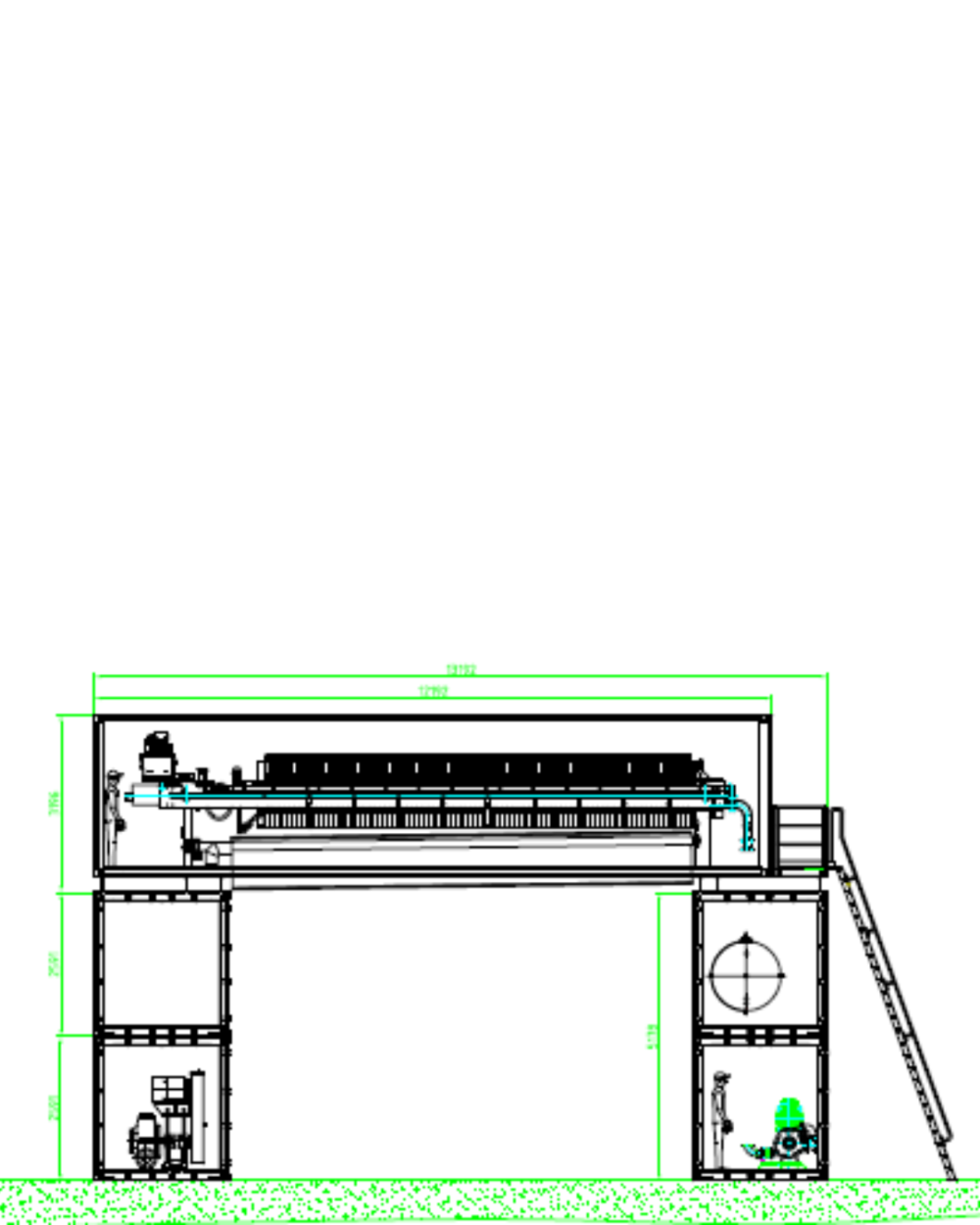
Semi-mobile filter press – container-based solution
A typical container-based facility might, for example, consist of:
- Pre-treatment unit
- Sludge treatment unit
- Process water management
- Technical or control container
- Support containers (to ensure the correct outlet height for the filter cake)
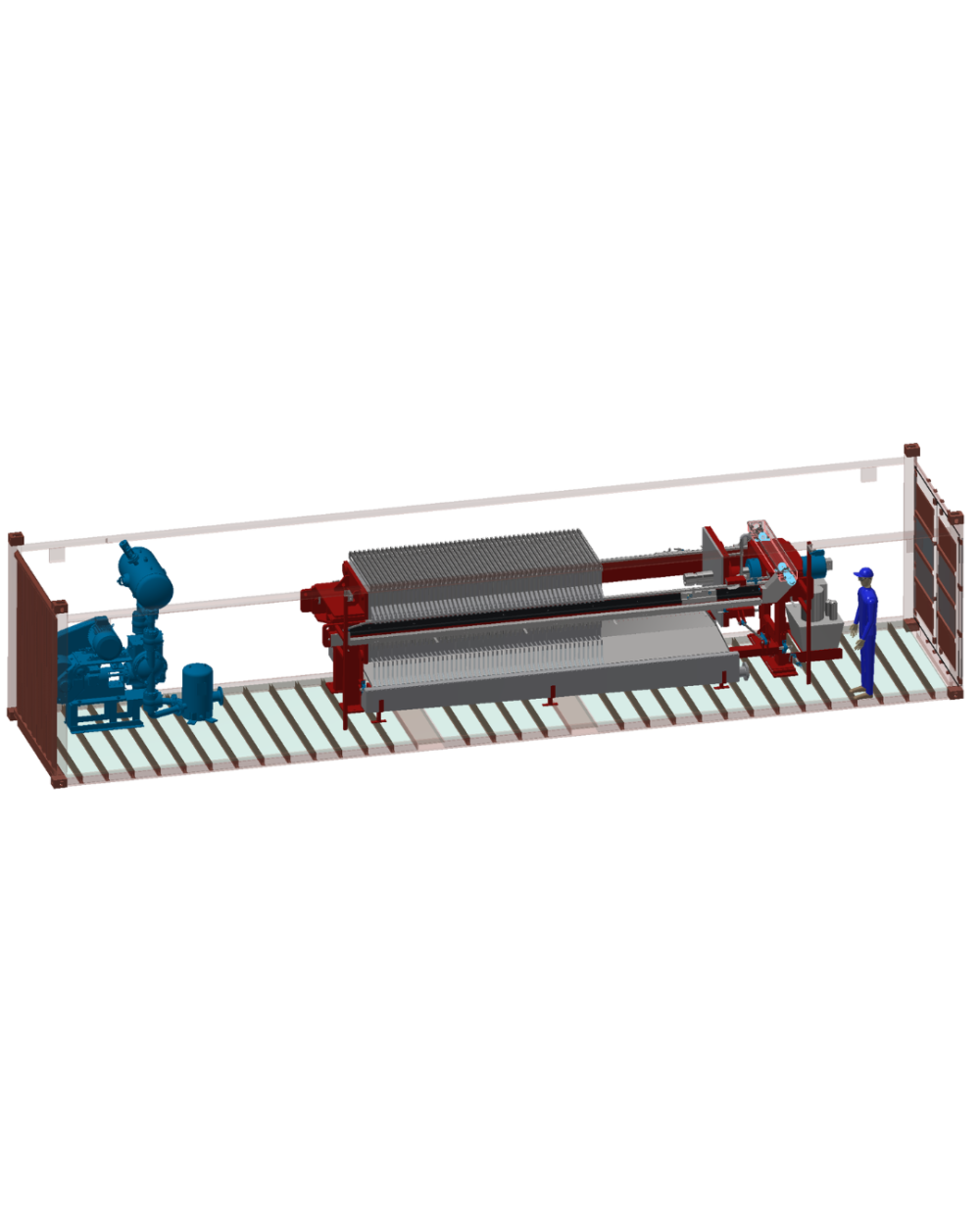
- Filter press containers
By stacking or placing containers together, you can create a a complete and efficient production line.
This solution is particularly suitable when:
…the facility is to be used over an extended project period
…the capacity is relatively high
…several process steps need to be integrated
…you want to be able to dismantle and move the system if necessary
Although the installation is flexible, it usually requires some on-site set-up and installation.
Mobile filter press – trailer-mounted solution
A mobile filter press is built into a on a trailer or on a tow bar. This means that the entire unit can be transported directly to a new location by being attached to a lorry. The main advantage is that the installation is fast and highly flexible.
A trailer-mounted filter press is particularly suitable when:
- the facility needs to be moved frequently
- the projects are short-term
- the capacity requirement is more limited
- A quick start-up is important
In many cases, a mobile filter press can be was put into operation shortly after it arrived on site, making it ideal for temporary assignments or maintenance work.

When are semi-mobile and mobile solutions most suitable?
The choice between a semi-mobile and a mobile filter press depends primarily on the duration of the project, capacity requirements and how often the facility needs to be relocated.
Semi-mobile filter press (container) = Provides a high-capacity, modular processing plant. Mainly used for longer-term projects and larger dewatering systems
Mobile filter press (trailer) = Is highly versatile and quick to install. It is most commonly used for temporary projects, maintenance and promotional campaigns.
Flexible dewatering solutions for industry
Mobile and semi-mobile filter presses make it possible to quickly set up temporary drainage facilities without having to build a permanent installation.
This offers a great deal of flexibility in projects where processes or workplaces change over time.
At Lyma, we help you choose the right solution based on process, capacity and mobility requirements, so that dewatering is both effective and cost-effective.
Would you like to know whether a mobile or semi-mobile filter press is best suited to your application?
Get in touch and we’ll help you find the right solution for your process.