Customer case Outokumpu
Valve solutions for extremely aggressive pickling processes
Iron processing has been carried out in Avesta since the 16th century. The focus on speciality steel began in 1924 with the production of stainless, acid-resistant and refractory steel and has been the dominant manufacturing area since the 1960s.
The challenge
During the production of stainless steel tubes, impurities are introduced into the material, for example from internal transport, welding or mechanical processing. After welding, the pipes must therefore be pickled to remove iron particles and other impurities that might otherwise affect the properties of the steel.
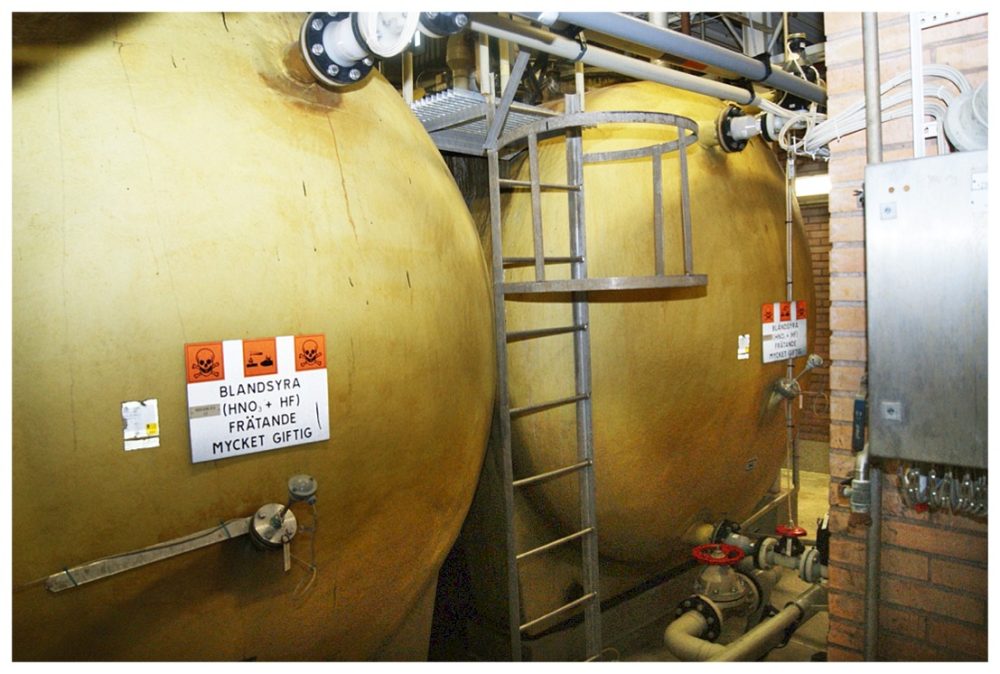
Pickling is done either in pickling baths or by spray pickling and uses very aggressive acids. The challenge was not in the steel production itself, but in the finishing process - where the corrosive pickling medium placed extremely high demands on valves and peripherals. Previous solutions could not cope with the chemical load over time.

The solution
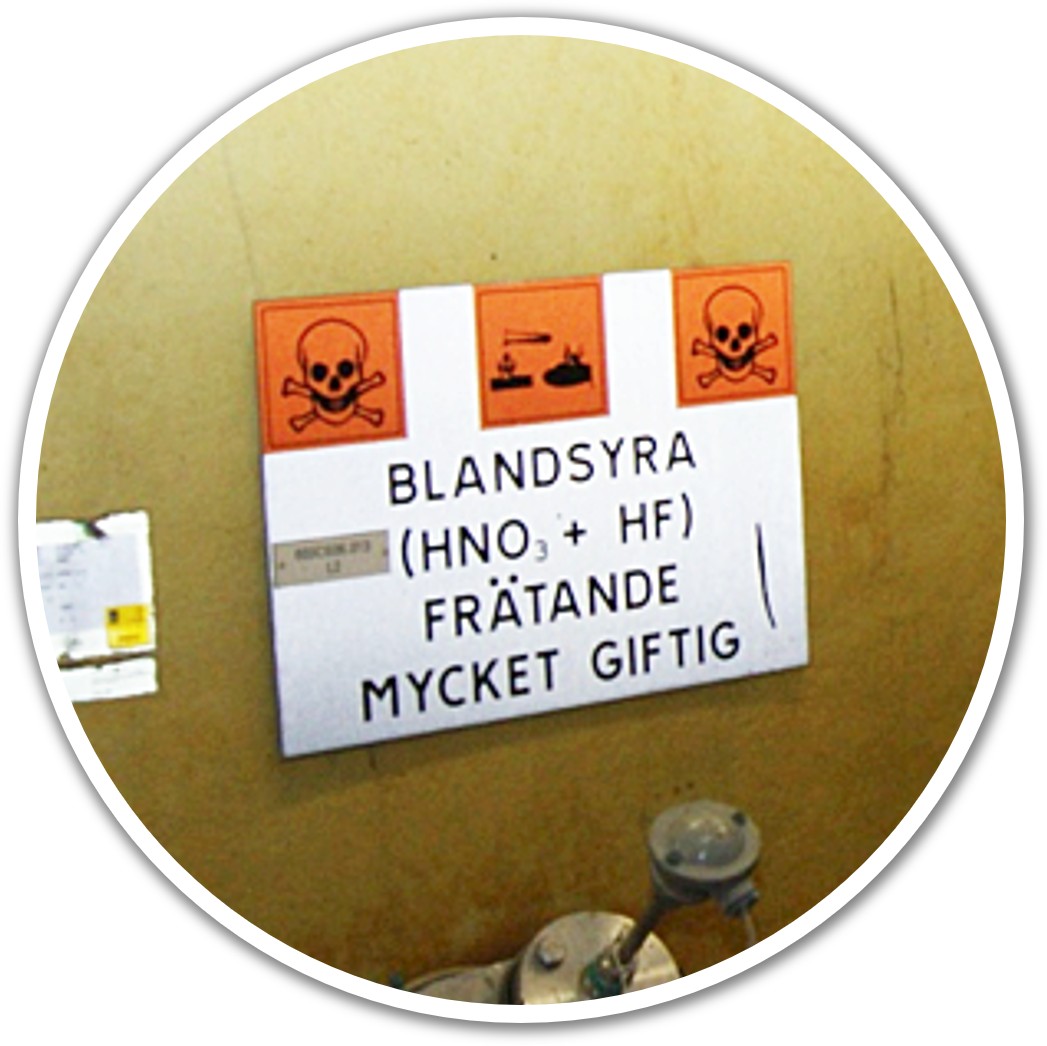
For the application, valves were chosen from Asahi, developed for handling highly corrosive acids. The process uses a mixed pickling acid consisting of nitric acid (HNO₃) and hydrofluoric acid (HF), which effectively removes impurities from the stainless steel.
Asahi is one of the pioneers in thermoplastic valves, offering a wide range of valves for the most demanding industrial applications. Through continuous material development, market-leading performance is achieved in terms of the relationship between working pressure, temperature and chemical resistance.
Lyma has been working with Asahi since 1979 and is today the market leader in the field.
The solution enables safe and long-term handling of extremely aggressive pickling media. The valves withstand the chemical load and contribute to:
-
High operational reliability
-
Safe sampling
-
Reduced risk of leakage and material impact
-
Long life in a demanding industrial environment


Valve solutions in the process
The installation includes diaphragm valves in several sizes, adapted to different parts of the process:
-
Less membrane valves mounted above the sampling cabinet
Enables safe sampling of the aggressive media without risk to staff health. -
Medium and large membrane valves
Ensures stable and reliable operation in process flows with high chemical requirements. -
Automatic valves
Provides controlled and repeatable management of the process. -
Valves with diffusion barrier
Prevents the penetration of acids and extends the life of the valve.
Complementary components such as ball valves, flange gaskets and diaphragm pressure transducers used where the application requires it.

Want to know more?
Interested in hearing more about our projects or discussing a solution for your business? Contact us - we'd love to tell you more.