


Ball valves

Ball valves for safe and tight shut-off in the process industry
Ball valves are mainly used to closing or opening flows (on/off) in industrial pipework. They are particularly appreciated for their gas-tight shutdown, low pressure drops and easy automation.
Lyma offers ball valves in several designs and materials for demanding applications in the process industry, where aggressive and corrosive media place high demands on reliability and chemical resistance.
Dimensions available up to DN200, where the most frequent area is DN15-80.
Filter

Asahi ball valve type 21 DN10-100

Richter PFA/PTFE lined ball valve type KN/F

Asahi three-way ball valve type 23BV DN15-100

Asahi three-way ball valve type 23HBV DN25-40
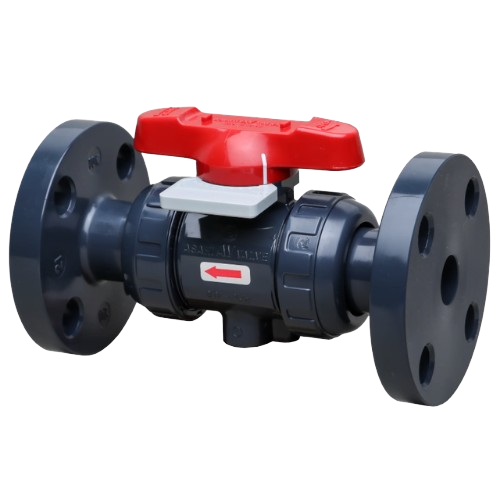
Asahi ball control valve type 21a DN15-50

Asahi pneumatic ball valve type 21AR DN15-100
How does a ball valve work?
A ball valve regulates the flow by means of a ball with through hole rotates 90° between two valve seats.
When the ball is turned:
-
The hole in the ball lines up with the pipeline → the flow opens
-
The ball is turned across the flow → the flow is closed
Valve seats are usually made of soft-sealing materials such as PTFE, which provides high density and low friction.
Ball valves are mainly designed for:
-
Full switch-off (on/off)
-
Minimal pressure loss
-
Fast manoeuvring
Some variants also enable limited regulation and adjustment.
Connections and manoeuvring
Ball valves can be supplied with several different connection options:
-
Flange connection
-
Welding connection
-
Threaded connection
-
Glue connection
Manoeuvring can be done via:
-
lever
-
Manual gearbox
-
Pneumatic actuator
-
Electric actuator
Thanks to their simple quarter-turn operation, ball valves are particularly suitable for automation and process control.
3-way ball valves for flow switching
For applications where the flow is to be controlled between different pipework, the 3-way ball valves.
These may have:
-
T-drilled ball
-
L-drilled bullet
They are used when needed:
-
Distribute flow
-
Mixing flow
-
Redirecting media in pipework
Ball valves for corrosive and aggressive media
Lyma offers ball valves adapted for:
-
acids
-
base
-
solvents
-
chemicals
-
aggressive liquids
Material selection is crucial for long life and safe operation. Depending on the application, valve bodies and seals can be supplied in plastic, metal or specialised materials with high chemical resistance.
We help you choose the right ball valve based on:
-
media
-
temperature
-
pressure
-
dimension
-
requirements for automation
Advantages of ball valves in industrial applications
-
Gas-tight shutdown
-
Low pressure drop
-
Fast opening and closing
-
Simple automation
-
Long life with the right choice of materials
This makes ball valves one of the most common valve types in the process industry.
Need help choosing the right ball valve?
Contact Lyma we will help you design the right ball valve for your application - focusing on safety, reliability and optimal process performance.