


Dosing pumps

Dosing pumps for precise and safe chemical dosing
Dosing pumps are used when accuracy, repeatability and process control is crucial. Lyma Kemiteknik offers dosing pumps for precise chemical dosing in demanding industrial environments, where aggressive, toxic or corrosive media must be handled in a safe and controlled manner.
Our dosing pumps are used in areas such as water treatment, chemical industry, steel production, paper industry and energy sector, where small quantities of chemicals need to be dosed continuously or at intervals with high precision.
Filter

Liquiflo PFA lined gear pump type Polyguard

Liquiflo gear pump H series

Liquiflo gear pump max series

Jesco magnetic drive diaphragm metering pump type Magdos LB/LD/LA/LK /LP/DE/DX

Jesco motorised membrane dosing pump Memdos Smart LB/LD/LK/LP

Jesco motorised diaphragm dosing pump Memdos LB/LP

Jesco motorised membrane dosing pump Memdos GMR / ZGMR

Jesco motorised piston dosing pump type Fedos/Rekos/Kardos
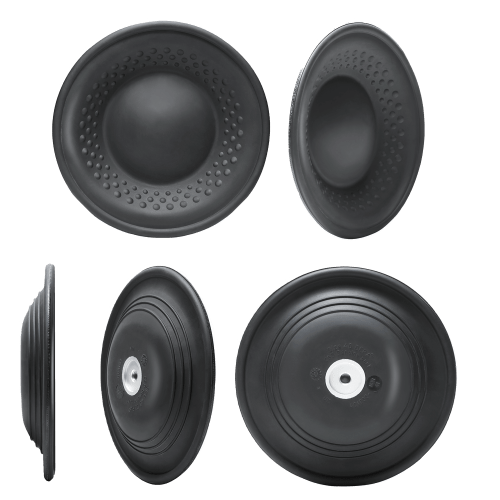
DEPA E4 membrane

DEPA Nopped S4 Santoprene membrane

Pulsation dampers JESCO

Injection nipple JESCO

Suction line JESCO

Multi valve type Pentabloc JESCO

Jesco complete dosing systems

Pulsation dampers DEPA

Air regulator DEPA

Soft start valve DEPA

Liquiflo repair kit
What is a dosing pump?
A dosing pump is a positive displacement pump which is designed to dose precise and controlled amounts of liquid over time, independent of back pressure in the system. Unlike centrifugal pumps, dosing pumps deliver a predetermined flow per stroke or revolutionmaking them ideal for chemical dosing.
Dosing pumps are often used when:
-
high dosing accuracy is required
-
small flows should be precisely regulated
-
the process is pressurised
-
the medium is aggressive or toxic
Types of dosing pumps in Lyma's range
Lyma offers several types of industrial metering pumps, adapted for different media, pressures and capacity requirements.
Diaphragm metering pumps
Motorised diaphragm metering pumps are a common choice for chemical dosing in the process industry. They offer:
-
high chemical resistance
-
seal-free construction
-
high safety in case of toxic media
-
possibility of ATEX design
Piston metering pumps
Piston metering pumps are used when high pressures and very precise dosing required. They are well suited for:
-
high back pressures
-
stable and repeatable dosage
-
demanding industrial processes
Gear pumps for dosing
For applications that require pulse-free dosing gear pumps can be an alternative. They are often used in:
-
continuous dosing
-
smooth flow without pulses
-
low to medium viscosity chemicals
How to choose the right dosing pump?
To select the right dosing pump, it is important to consider both process and media. Lyma works according to a clear selection process:
-
Define the medium
- chemical composition, temperature, pH and viscosity -
Determine flow and dosage requirements
- continuous or intermittent dosing, desired accuracy -
Determine back pressure and system conditions
- pipe lengths, valves and pressure levels -
Choose the right pump type and material
- diaphragm, piston or gear and choice of material
We help you all the way to ensure reliability, longevity and optimal process control.
Dosing pumps for demanding industrial environments
Lyma dosing pumps are designed for use in environments where:
-
aggressive chemicals are present
-
high reliability is crucial
-
safe handling is a requirement
They are frequently used in:
-
water and wastewater treatment
-
chemical industry
-
steel and metal industry
-
the pulp and paper industry
-
the energy sector
Lyma range of metering pumps
At Lyma you will find dosing pumps in different materials, capacities and designs, customised to your application. We also offer:
-
accessories such as pulsation dampers and control systems
-
material selection for aggressive media
-
ATEX-approved solutions
-
technical advice and support
Our focus is always on process reliability, precision and long-term operational economy.
Do you need help with chemical dosing?
Contact Lyma and we'll help you choose the right dosing pump for your process - from feasibility study to finalised solution.